пятница, 29 января 2010 г.

Module 2 ( 7. How many national parks are in New Zealand? Provide their names with brief introductions ) :


National Parks

There are 14 National Parks in New Zealand


  1. Te Urewera
New Zealand's fourth largest national park is the ancestral home of the enigmatic Tuhoe people. Legend traces the parentage of the Tuhoe to Hine Pukohurangi (the mist maiden) and Te Maunga (the mountain), which is why the Tuhoe are known as 'children of the mist'.


2. Egmont
Reaching 2518 metres above sea level, Mt Taranaki is New Zealand's most perfectly formed volcano. It is around 120,000 years old, and last erupted in 1775. Volcanologists agree that the mountain is 'dormant' rather than extinct.


3. Whanganui
This park encloses the wild upper and middle reaches of the Whanganui River, which is New Zealand's longest navigable waterway. Beginning beneath the shadow of the central plateau's giant volcanoes, the 329 kilometre river winds its way to the Tasman Sea through an endless procession of forested valleys and hills.

4. Tongariro
The Tongariro National Park encircles the volcanoes of Tongariro, Ngauruhoe and Ruapehu. It was gifted to the nation by Maori chief Te Heuheu Tukino IV in 1887. Just over a hundred years later, the park was awarded World Heritage Site status.


5. Abel Tasman
Named for Dutch explorer Abel Tasman, who first visited the region in 1642, this national park is New Zealand's smallest - but it's perfectly formed for relaxation and adventure.

6. Kahurangi
In the Maori language, Kahurangi means 'treasured possession' - a clue to the attractions of this large, wild park. Within its boundaries are some of the oldest rocks, strangest plants and rarest birds in New Zealand.

7. Nelson Lakes

A compact area of mountain ranges separated by forested valleys, the Nelson Lakes National Park promises all levels of challenge for keen hikers and mountaineers.

In Maori mythology the lakes were created by the great chief Rakaihaitu digging holes with his ko (digging stick). One hole became Lake Rotoiti (small waters) and the other became Lake Rotoroa (large waters).

8. Paparoa
The Paparoa National Park was created in 1987, to protect a unique limestone karst environment from mining and forestry. In the interests of science, the boundaries of the park were carefully established to encompass a complete range of landscapes and ecosystems - from the granite and gneiss summits of the Paparoa Range down to the layered rock formations of Punakaiki.

9. Arthur's Pass

Arthur's Pass is the highest pass over the Southern Alps. Long before surveyor Arthur Dudley Dobson found his way over the pass in 1864, it was known to Maori hunting parties as a route between east and west.

The eastern side of Arthur's Pass National Park is characterised by wide, shingle-filled riverbeds and vast beech forests. The western side of the park, where wet weather is more common than dry, has deeply gorged rivers flowing through dense rainforest. Down the middle of 'the great divide' is an alpine dreamland of snow-covered peaks, glaciers and scree slopes.


10. Westland/Tai Poutini

There are more than 60 glaciers in the Westland/Tai Poutini National Park. Two of them - the Fox and the Franz Josef - are the only glaciers in the world to flow down to temperate rainforest.

11. Aoraki/Mount Cook

The Aoraki/Mount Cook National Park is alpine in the purest sense - with skyscraping peaks, glaciers and permanent snow fields. Aoraki/Mount Cook, New Zealand's tallest mountain, helped Sir Edmund Hillary to develop his climbing skills in preparation for the conquest of Everest.

12. Mount Aspiring

Named for Mt Aspiring, one of New Zealand's highest peaks, this park is a dreamland of mountains, glaciers, river valleys and alpine lakes.

In the past, Maori trekked through the region on their way to the pounamu fields of the west coast; Europeans visited to map, name and explore geographical features of the area; settlers attempted to farm and mine some of the valleys - the relics have blended into the stunning scenery.

For wilderness lovers, the park offers an extensive choice of valley journeys - including the Routeburn Track. In summer, it's possible to walk from one valley to another over spectacular mountain passes.

13. Fiordland

The seaward edge of Fiordland National Park is a series of fourteen massive knife cuts, carved by the glaciers during successive ice ages.

Towering, snow-capped peaks reflect in the midnight blue fingers of ocean that reach into the park's thickly forested interior, where you can find trees that are more than 800 years old. For sheer drama, few places of earth can compete with this remarkable natural environment.

14. Rakiura

Many people think of New Zealand as two islands, when it is actually three. Subantarctic Stewart Island, which lies 30 kilometres south of the South Island, has a land area of nearly 2000 square kilometres, and 85% of it is included within the boundaries of Rakiura National Park.

The most recent addition to New Zealand's nation


Module 2 ( 6.How many people use the Internet in New Zealand (2008)? ) :


Users of internet in new Zealand


3.047 million people used internet in New Zealand ( 2008).
Module 2 ( 5.Describe the present national flag of New Zealand.When was it made official? How many stars are there on New Zealand's flag and how are they positioned? ) :


Flag


The New Zealand Flag features, on a royal blue background, a Union Jack in the first quarter and four five-pointed red stars of the Southern Cross on the fly. The stars have white borders.

The notice that appeared in the New Zealand Gazette, 27 June 1902, gave the following technical description of the stars and their positions on the New Zealand Flag.

"The centres of the stars forming the long limb of the cross shall be on a vertical line on the fly, midway between the Union Jack and the outer edge of the fly, and equidistant from its upper and lower edges; and the distance apart of the centres of the stars shall be equal to thirty-six sixtieths the hoist of the ensign.

The centres of the stars forming the short limb of the cross shall be on a line intersecting the vertical limb at an angle of 82 therewith, and rising from near the lower fly corner of the Union Jack towards the upper fly corner of the ensign, its point of intersection with the vertical line being distant from the centre of the uppermost star of the cross twelve-sixtieths of the hoist of the ensign. The distance of the centre of the star nearest the outer edge of the fly from the point of intersection shall be equal to twelve-sixtieths of the hoist of the ensign, and the distance of the centre of the star nearest the Union Jack from the point of intersection shall be equal to fourteen-sixtieths of the hoist of the ensign.


<= there are 4 stars on the flag


The star nearest the fly edge of the ensign shall measure five-sixtieths, the star at the top of the cross and that nearest to the Union Jack shall each measure six-sixtieths, and the star at the bottom of the cross shall measure seven-sixtieths of the hoist of the ensign across their respective red points, and the width of the white borders to the several stars shall in all cases be equal to one one-hundred-and-twentieth of the hoist of the ensign."

The New Zealand Flag may be made to any size, but in all cases the length should be twice the width.


<= Proportions of the New Zealand Flag

Module 2 ( 4. Describe the governmental system of New Zealand. Who is the head of the state in New Zealand? What are the official languages of the country? ) :


Government

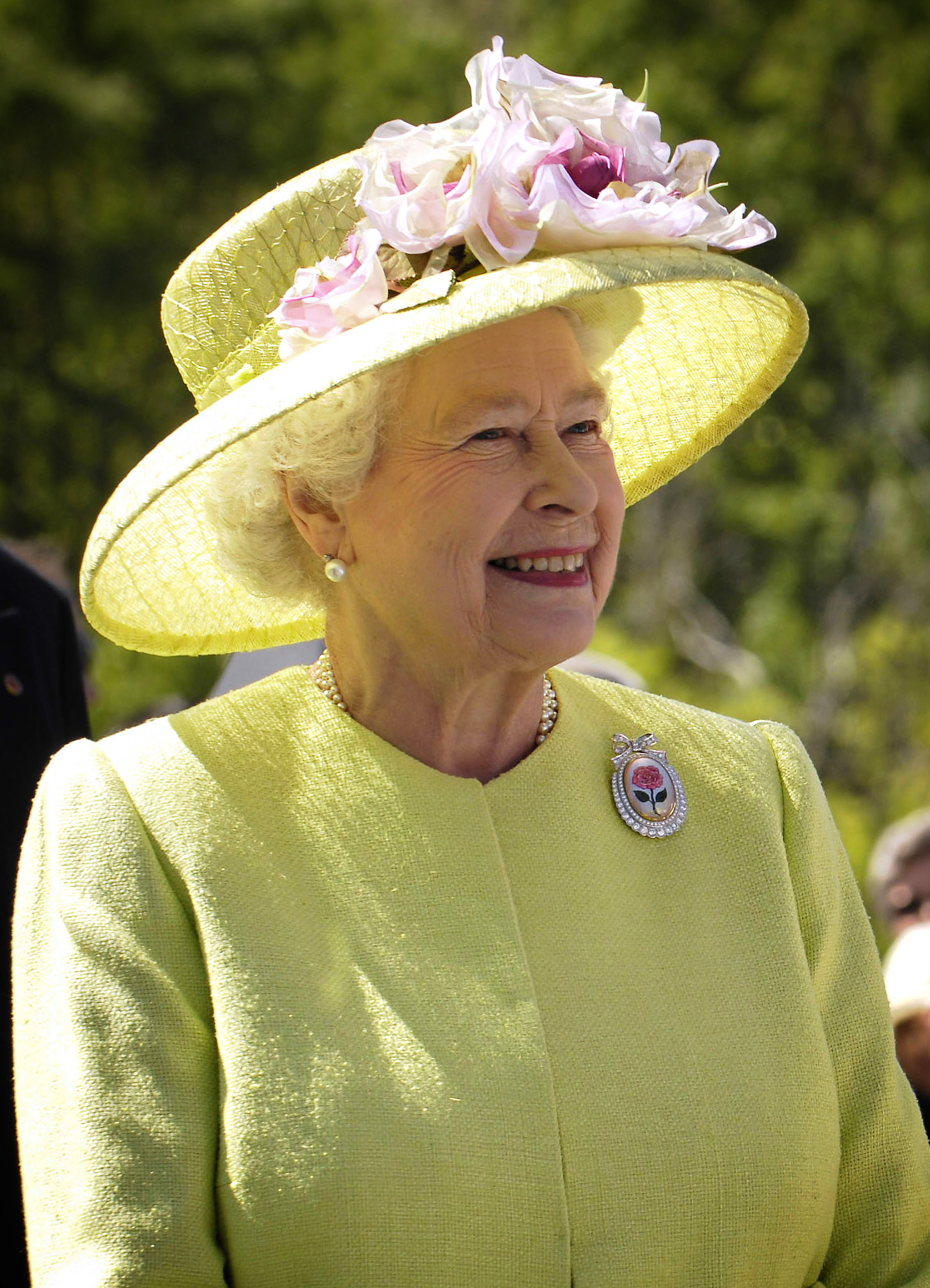
New Zealand is a constitutional monarchy with a parliamentary democracy. Although it has no codified constitution, the Constitution Act 1986 is the principal formal statement of New Zealand's constitutional structure. The constitution has been described as "largely unwritten" and a "mixture of statutes and constitutional convention." Queen Elizabeth II is the head of state and is titled Queen of New Zealand under the Royal Titles Act 1974. She is represented by the Governor-General, whom she appoints on the exclusive advice of the Prime Minister. The current Governor-General is Anand Satyanand.


<= Elizabeth II, Queen of New Zealand


<= Anand Satyanand, Governor-General


The New Zealand Parliament has only one chamber, the House of Representatives, which usually seats 120 Members of Parliament.


Official languages


English is spoken by 98% of the population and Māori by 4.1%.


Module 2 ( 3.What is the name of the film, which was entirely shot in New Zealand and is highly acclaimed around the world? Add more information about the film and the fimstars!) :


' Lord Of The rings'


' Lord of the Rings' was filmed entirely in New Zealand.

Lord Of The Rings: The two towers :

Genre: Adventure, Drama, Fantasy.
Release Date: 10 January 2003


Module 2 ( 2. What is "weta" in New Zealand? Illustrate! ) :


Weta

The weta is native to New Zealand.
It is a rather large insect. While harmless to humans, its bite can be painful. It is a protected species, and, despite its repellent aspect, may not be harmed.


Module 2 ( 1. What is the 'Treaty of Waitangi', when was it signed and how did it get its name? ) :


Treaty of Waitangi


The Treaty of Waitangi is a treaty first signed on February 6, 1840.